
St. John’s to offer disabilities program
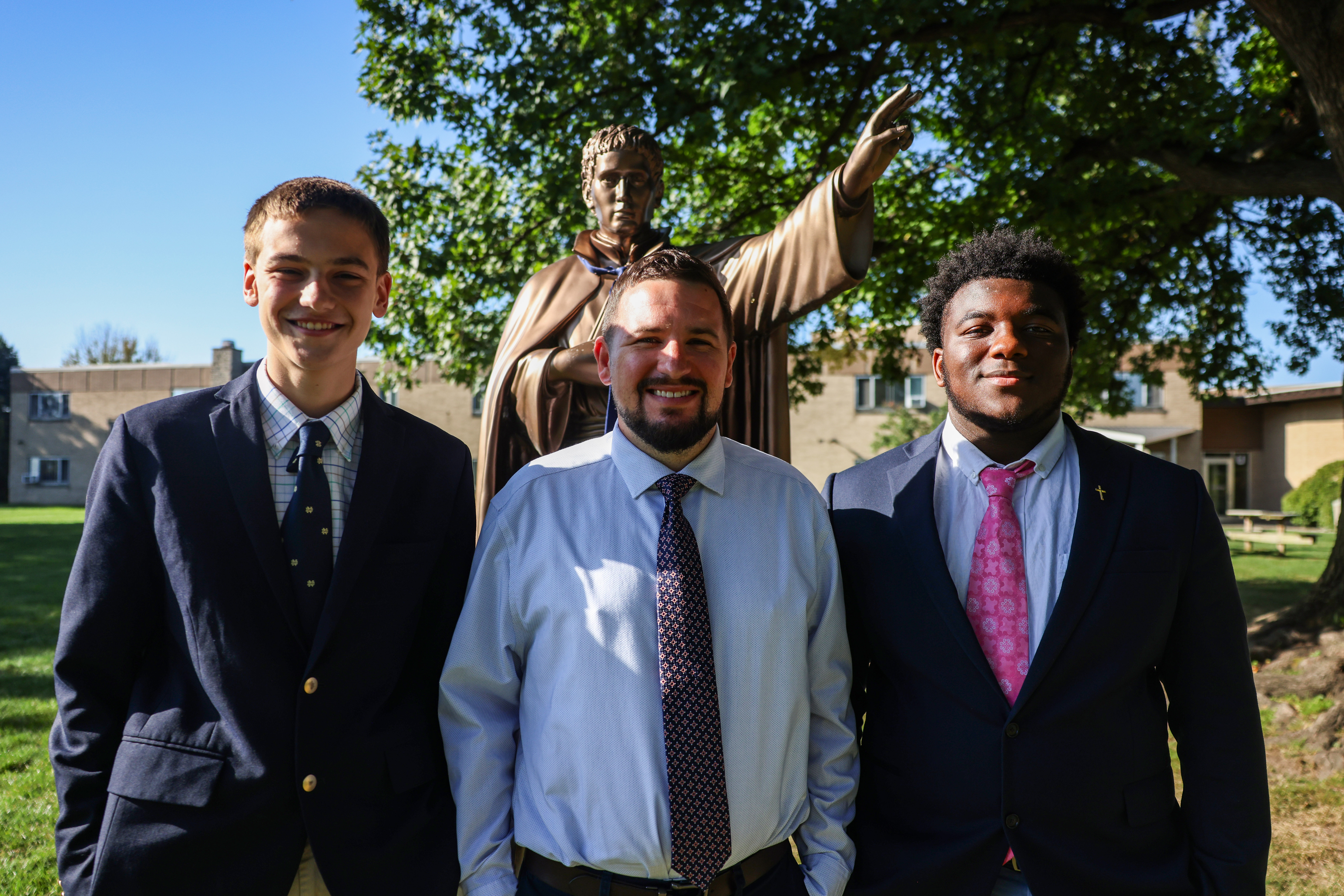
When St. John’s Jesuit High School decided to start a new program for students with intellectual and physical disabilities, administrators didn’t have to look far to find students who wanted to get involved.
Kelvin Briggs, a junior, signed up to become a mentor to the new students because he said he wants to be of service to a student who needs extra help.
“I am looking forward to helping someone out,” Kelvin said. “Being able to bring them into the school and making it feel like home to them will be great.”
St. John’s new Gonzaga Scholars program will offer young men with intellectual and developmental disabilities access to the full experience of a St. John’s Jesuit education.
Michael Pool, St. John’s president, said the first program participants will be enrolled for the 2027-28 school year. The first cohort will consist of four students entering as freshmen.
“Historically, Catholic high schools have not been able to serve those students with disabilities,” Mr. Pool said. “For me, being able to offer this program is an extension of our mission to give students a great Catholic education. To have students go out into the world and make a difference.”
1st of its kind
The program, which is the first of its kind among Ohio’s Jesuit high schools, will ideally add four more students each year and continue to grow, Mr. Pool said.
Kathryn Sliwinski-Mundrick, vice president of human resources, said 18 Catholic high school programs across the country admit students with disabilities.
“St. John’s modeled the Gonzaga program after similar programs at Notre Dame College Prep in Niles, Ill., and De Smet Jesuit High School in St. Louis, Mo.,” she said.
Nate James, the Gonzaga Scholars program director, said eligibility includes that the student be in eighth grade, have math proficiency at a second to eighth-grade equivalent, English proficiency at a second to sixth-grade equivalent, the ability to follow high school behavior expectations, and have the ability to maintain self-care independently.
“In the end the program has to be a good fit to the student’s needs and abilities,” Mr. James said. “Our goal is to be as inclusive as possible and for them to receive the best education.”
The school has students on individualized education plans, and employs four intervention specialists. Mr. James will be the additional fifth specialist next fall.
“The students will be able to be in a regular classroom and attending classes with their peers,” he said. “For students who need help with English, math, and science, I will be able to take them out of the classroom and teach them in another setting.”
Students can opt for a certificate of completion or choose to earn a diploma. Students and their families can decide on their own path.
Mentors to help
A student mentor program of upperclassmen will also guide the Gonzaga Scholars.
Ms. Sliwinski-Mundrick said the school’s mentor program is meant to help new students feel welcomed into the school community. Her son, Oliver, a seventh-grade student at the school, has ADHD.
“The Titan brotherhood is amazing,” she said. “The young men accompany each other and support each other. The new students will have a group of friends who will support and welcome them.”
Jake Spenthoff, a sophomore, said he wanted to be a mentor because of his brother, who is autistic.
“I think it is a great program and will be a great experience to be involved in,” Jake said. “I think this program will be great for students with disabilities, being able to make friends and be with everyone here.”
Jake said he wants to help the students have a normal student experience.
“I think being able to help them just have the most normal, realistic opportunities they can have in the classroom, at Mass, and other activities is going to be the best for them,” Jake said.
Kelvin said he envisions being able to help a student just have a “regular day” at the school.
“It would be great to just go around with them to say ‘Hi’ to the teachers,” he said. “Maybe just go to the gym and play basketball. Really, just a normal day. We are all just humans at the end of the day.”
Ability Center opportunities
Maggie Dreier, director of independent living for the Ability Center, consulted with St. John’s as they developed the Gonzaga program.
“This is a thoughtfully designed program for young men with intellectual and developmental disabilities,” Ms. Dreier said. “This initiative reflects the heart of St. John’s mission to develop Christian leaders and ‘men for others’ by recognizing the dignity, strengths, and potential of every individual.”
Ms. Dreier said the program will offer opportunities for students with disabilities.
“It is an important step toward a future where inclusion, access, and belonging are integral to educa-tion, and where students with and without disabilities have the same opportunities to learn, grow, and thrive alongside their peers,” she said.
“By creating a pathway for these young men to experience the full high school journey,” she added, “St. John’s is expanding access in the private school sector and its many opportunities for students with disabilities and their families.”
Currently, tuition at St. John’s is $17,950. About 80 percent of families receive merit or need-based financial aid, said Phil Anthony, director of admissions and financial aid. St. John’s has 150 different scholarships for students and their families.
“There are also state scholarships available including the Jon Peterson Special Needs Scholarship, and an autism scholarship,” Mr. Anthony said. “The state also offers the Ed Choice program and we offer a payment plan as well. We work with families all of the time.”
St. John’s will hold a fall open house beginning at 1 p.m. Nov. 15 for families and students to learn more about the Gonzaga Scholars program, meet Mr. James and the program team, and ask questions in person.
Families are asked to RSVP via a St. John’s Jesuit Google form.
Contact Melissa Burden at
mburden@theblade.com.