
A love that defies biology

Some women mother the children they bear.
Others pour themselves into lives that become theirs by love rather than by blood.
For these women, their paths to motherhood did not follow biology, yet their impact on children and communities is unmistakable and enduring.
For years, honoring Mom was a wound for Christina Rodriguez, not a celebration.
“I used to hate Mother’s Day. I would hate going to church because it just hurt too much. But I had to celebrate my own mom,” she said. “Infertility is hard.”
The church services, the cards, the flowers were all reminders of the children she longed for but never held.
“This was before I was healed,” she said.
Quiet struggles, loud impact
A quiet storm of loss and strain marked the early chapters of Ms. Rodriguez’s life.
“I was married and we struggled with infertility, which is actually what mostly led to our divorce because we couldn’t handle the pressure of it. We were young,” she said.
For a long time, she carried that story in painful silence while “all my friends, everybody’s having kids,” she said.
“I’ve held it quiet for many, many years, but it has shaped who I am when it comes to loving the children of our community and my family too,” she said. “It took me years to accept it, and when I finally did, I said, ‘OK, God, what is the purpose of this?’”
That question reshaped her life around a different kind of motherhood, one rooted in calling.
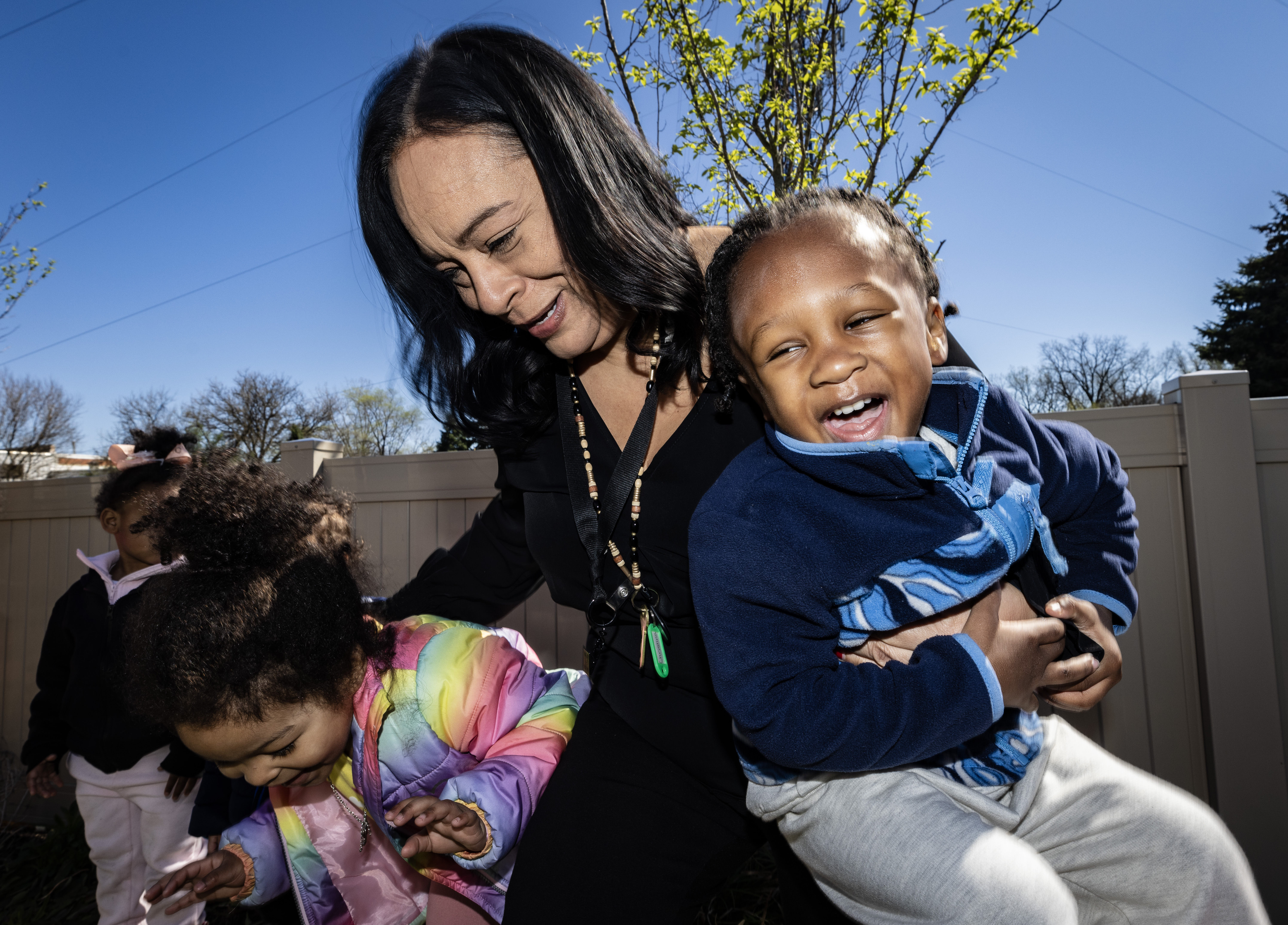
Ms. Rodriguez is the executive director of Mom’s House Toledo, a faith-based child-care center that provides free support to low-income, single parents in school.
Her days are filled with babies, toddlers, and young moms fighting to break the cycle of poverty.
“My motherhood looks different, but it is no less real to me and certainly not to the children that I love and serve,” she said. “I didn’t necessarily choose this path, but I chose what I was going to do with it.”
Ms. Rodriguez believes mothering is a calling, not just a condition.
“While I’ve experienced infertility, I don’t see that as the end of my story. Instead, it became a redirection. My life’s work has allowed me to pour into children and support families in ways that are deeply intentional and life-giving,” she said.
Her work centers on mothering the mothers in her care. And while she may not have given birth biologically, she has been blessed to “give birth from my heart,” she said.
“Obviously children need ‘mommed,’ ... but we mom the moms. We pour and sow seeds into their lives,” she said of the more than 200 mothers that have come through the program since she took on her role 18 years ago.
Mothering, for her, can mean filling a gas tank, answering a late-night call for a ride, or showing up in the middle of a domestic violence crisis.
“Sometimes mothering looks like walking alongside families as they grow and they heal, not necessarily because someone failed, but because we all need support at different times,” she said. “My role has often been to fill gaps with love, structure, and consistency.”
Her mothering spills beyond the walls of Mom’s House. To her extended family and community, she is lovingly known as “Titi Tina.” Titi is an affectionate Spanish term for aunt.
“I’ve woken up in the middle of the night with a 5-day-old baby and cared for the child just like any other mom,” she said. “I didn’t get a baby shower; I just did what I had to do because I saw a hole there, and I feel like I was called to it.”
Her late nephew Antonio, or Tono, understood that calling.
“On Mother’s Day, without fail, every year, I’d get a text from him. He would tell me, ‘Happy Mother’s Day,’ and he would always tell me ‘You’re more than titi to me, you’re a mom to me, and I love you,’” she said. “I just miss that text on Mother’s Day.”
The hurt of infertility hasn’t vanished but has been woven into purpose, allowing her to help other women experiencing the same pain.
She has chosen not to allow her experience to “define the limits of my ability to love,” Ms. Rodriguez said.
“I may not have carried every child, but I carry the responsibility of how they are loved,” she said. “Because how we love children literally shapes who they are, which shapes our community, shapes their family, and at the end of the day — shapes the world.”
From teacher to mom in under a year
Most teachers send their students home at the final bell. But first-grade teacher Makayla Claude opened her home to one of hers — permanently.
In a classroom at Fort Meigs Elementary in Perrysburg, a little boy in a bucket hat walked into her classroom and then into her heart.
“As soon as I met him, I loved him,” said Ms. Claude, 27.
Damian came into her life as a new student midway through first grade. The young teacher said she knew there was something different about the Lego-loving boy who sketches diagrams of the Titanic and dreams of building ships.
“Really, right away, we just kind of fit together, and I was able to love on him,” she said.
He was a child in the foster care system.
Within weeks, Ms. Claude was in touch with his caseworker, starting the foster-to-adopt process, and by March he had moved in.
They finished out the school year together — teacher and student at school, mother and son at home.
“I think back to what life was like a year ago, and now I’m like, he really was a missing piece that I needed, and I didn’t even know it,” she said. “Now I can’t imagine life without him.”
The journey has not been easy, as she chose to step into single motherhood at 25.
“Initially, I had the idea, but I was like ‘I’m young, I am not married, how can I do this financially?’ ... I just kept coming up with all these reasons,” she said.
She leaned on her school, church, and local community center for support, learning to accept help. With the encouragement of that village — including a principal who had adopted her own children — she began to believe she could do it and that they would come alongside her.
“He’s my little best friend, all the time, everywhere we go. And he brings so much joy and laughter, definitely laughter,” she said.
As she celebrates her first Mother’s Day, Ms. Claude is preparing for a new chapter: a summer wedding, followed by a move to Florida, where the family plans to foster and adopt again per her son’s request for “a million siblings.”
“Every child I believe is a gift from God,” she said. “Every child deserves to feel loved and cared for and valued.”
For Ms. Claude, this season is about faith, family, and the quiet power of chosen love.
“Being a mom is the most important job, even aside from careers,” she said. “That is what we’re called to do as moms ... to love them well and to raise them to be respectful human beings that can succeed in the world.”
Sewing a village together
Trevor Thomas Black once imagined a bustling home with “three boys and two girls, the players and cheerleaders” and a lifetime of Mother’s Day celebrations.
Instead, three pregnancies ended too soon.
“I used to think it was me. I couldn’t understand what was wrong with me,” she said.
Tests brought difficult news about her husband’s health, including testicular cancer and complications that meant pregnancy would not be possible.
Ms. Black chose to anchor herself in her marriage vows.
“For better, for worse and in sickness and health. I meant that,” she said.
While the idea of adoption appealed to her, her husband preferred to take another route to parenting.
“He said, ‘There’s enough kids already out here that don’t have the right kind of people to love on them. We can do that,’” she recalled.
They chose to widen their circle instead of closing their hearts.
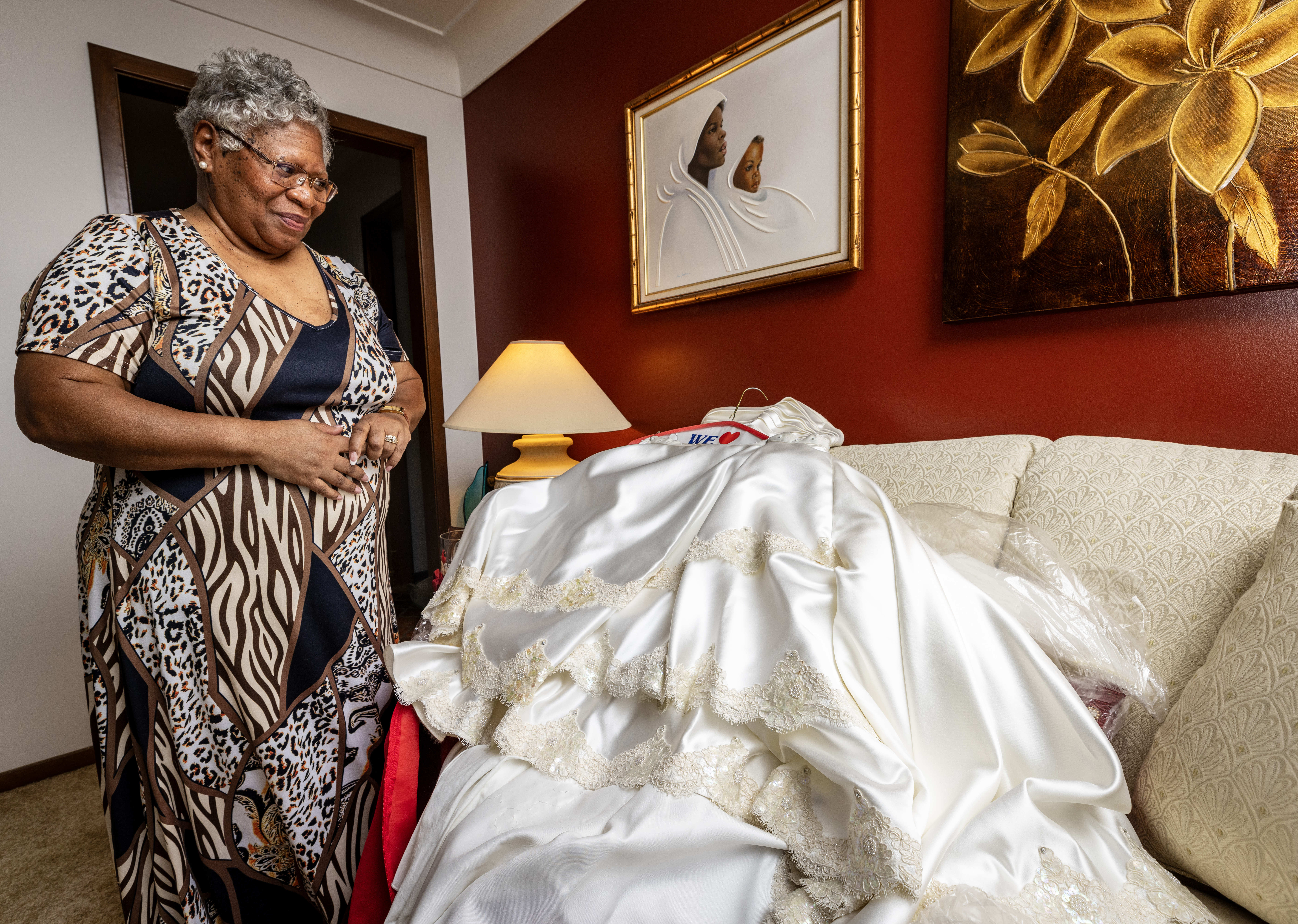
While her husband coached football, basketball, and track, Ms. Black — who has been a seamstress since the age of 8 — taught special education and sewed gowns and uniforms at Jesup W. Scott High School.
For 36 years, she made dresses for the school’s coronation — “and I never charged them,” she said.
Over the years, Ms. Black created thousands of gowns — wedding, prom, homecoming, and more — for students, neighborhood kids, family, and friends, many of whom came to see her as a mother.
“I have hundreds of kids. I have done hundreds of my girls’ weddings,” she said. “Matter of fact, I’ve done some of the boys’ weddings because they told their girlfriend or their fiancee, ‘Ms. Black has got to do y’all dresses.’”
When her husband Dennis died in 2024 after 50 years together, the proof of that parenting spilled into the streets, as former players and students came to honor him — and to pay their respects to her as their mother figure.
While she had no biological children, she was part of a profound, generational mothering, quietly stitching herself into families, which for her felt natural, she said.
“I never looked at it like an assignment because of the people that were in my life when I was growing up. It took a village. I always thought that’s the way I was supposed to be,” she said.
Additional love: the bonus mom
For generations, stepmothers have been cast as villains, with fairy tales portraying them as wicked stepmoms.
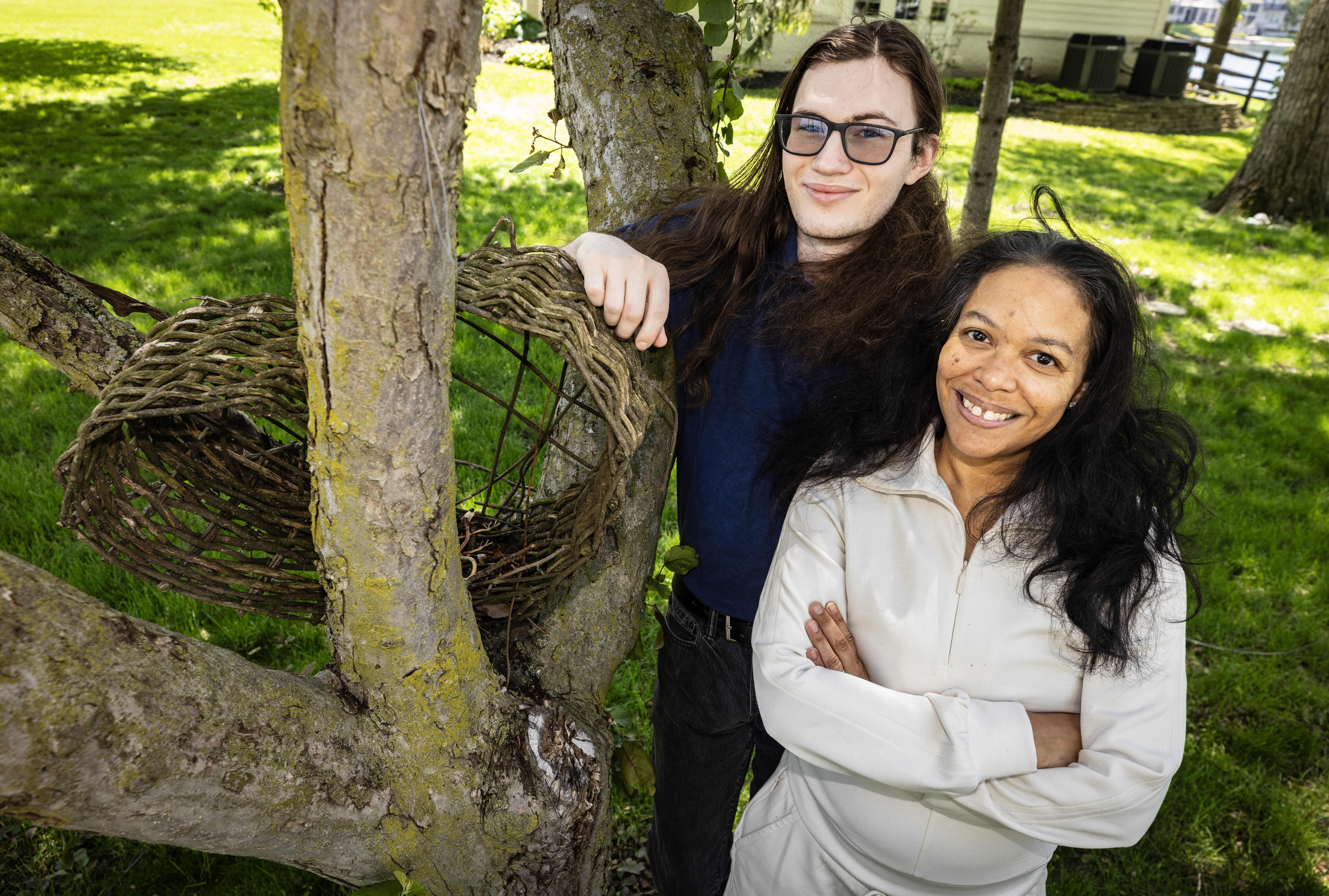
Rosetta “Rosie” Gounaris knows those stories well.
“There’s always either there’s the wicked stepmom or they’re the ‘I’m trying to take over,’” Mrs. Gounaris said. “I think those are the two main viewpoints on stepmothers, and, for the most part, they’re not wrong. That is how a lot of them act.”
Aware of those expectations, Mrs. Gounaris made a point of refusing that script in her own home, setting the stage for a different story.
In the multiracial, blended household she affectionately calls “the rainbow,” she folded her stepson, D’Artagnan, fully into the family count.
“When they ask me, ‘How many kids do you have?’ I say five, because I claim him,” Mrs. Gounaris said. “I try not to distinguish between a child and a stepchild. That’s just my thing, and my husband’s the same way.”
Instead of trying to replace his mother, Mrs. Gounaris rooted her parenting in honesty and consistency.
“I always maintained ‘I’m not your mother, I know you have a mother, and I know you love your mother,’” she said. “I’m not trying to take her spot; I’m just here to be something more if you want it.”
To her, the title is simple: bonus mom, positioning herself beside her son as one more steady source of care.
Now 20 and a college sophomore, D’Artagnan has been in her life since he was 4 years old.
“I was always just there. I was always just kind of a constant,” Mrs. Gounaris said, adding that consistency played a key role in her parenting.
“These are the rules. It applies to my children, and it applies to you. You’re no different than them — they’re no different than you,” she told him.
When stepping into this role she advises stepmothers to “learn the circumstances of what you’re getting into, be consistent, and know your role.”
“You’re a bonus; you’re there for additional support; and you’re there for additional love,” she said.
Contact Sheila Howard at showard@theblade.com.