
Ex-Rossford coach had long, impactful tenure
Sunday Chat is a new weekly feature appearing in The Blade’s print and digital platforms each Sunday.
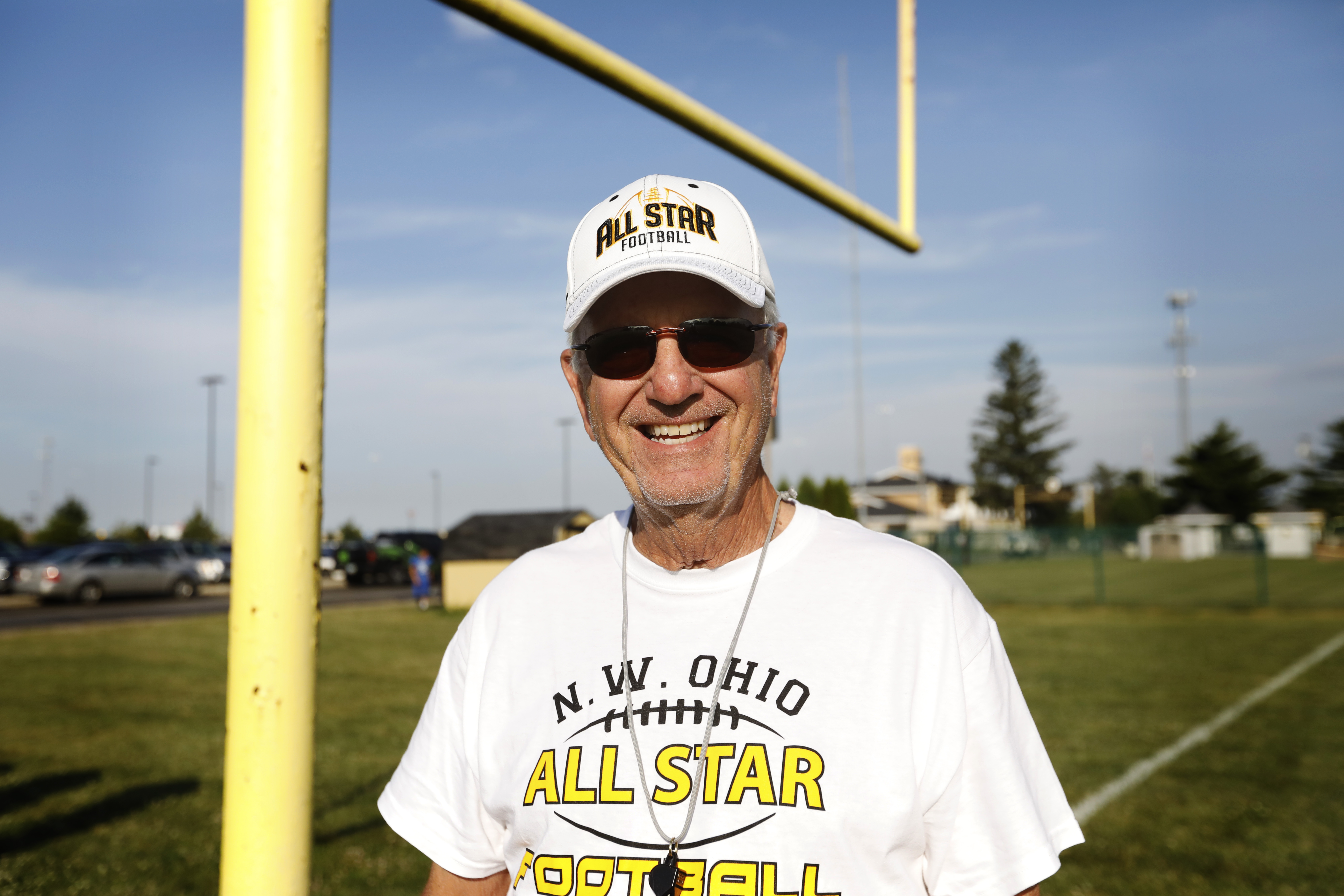
To fully understand the impact Tom Ferguson had on the Rossford football program, look at the name of the stadium on the high school campus.
A Rossford graduate, Ferguson led the Bulldogs football program from 1979 to 2002.
In 2004, the football stadium — formerly known as Bulldogs Stadium — was renamed Jackson-Ferguson Stadium. (Don Jackson coached the Rossford program from 1961 to 1978.)
Ferguson retired with a record of 119-133-3. His Bulldogs teams, which typically had the lowest numbers in the Northern Lakes League, produced six NLL titles — 1981, 1982, 1987, 1989, 1990, and 2002.
Ferguson moved to Rossford from East Toledo when he was 8 years old. He played basketball and football in high school. He was a four-year varsity starter in football and received several letters from small colleges and universities.
He attended Findlay College on scholarship and was the team’s starting running back and receiver.
After a short stint in the Air Force, Ferguson went back to Findlay College in 1970 and became a receivers coach for two years.
In 1979, Ferguson was offered the head football position at Rossford and accepted.
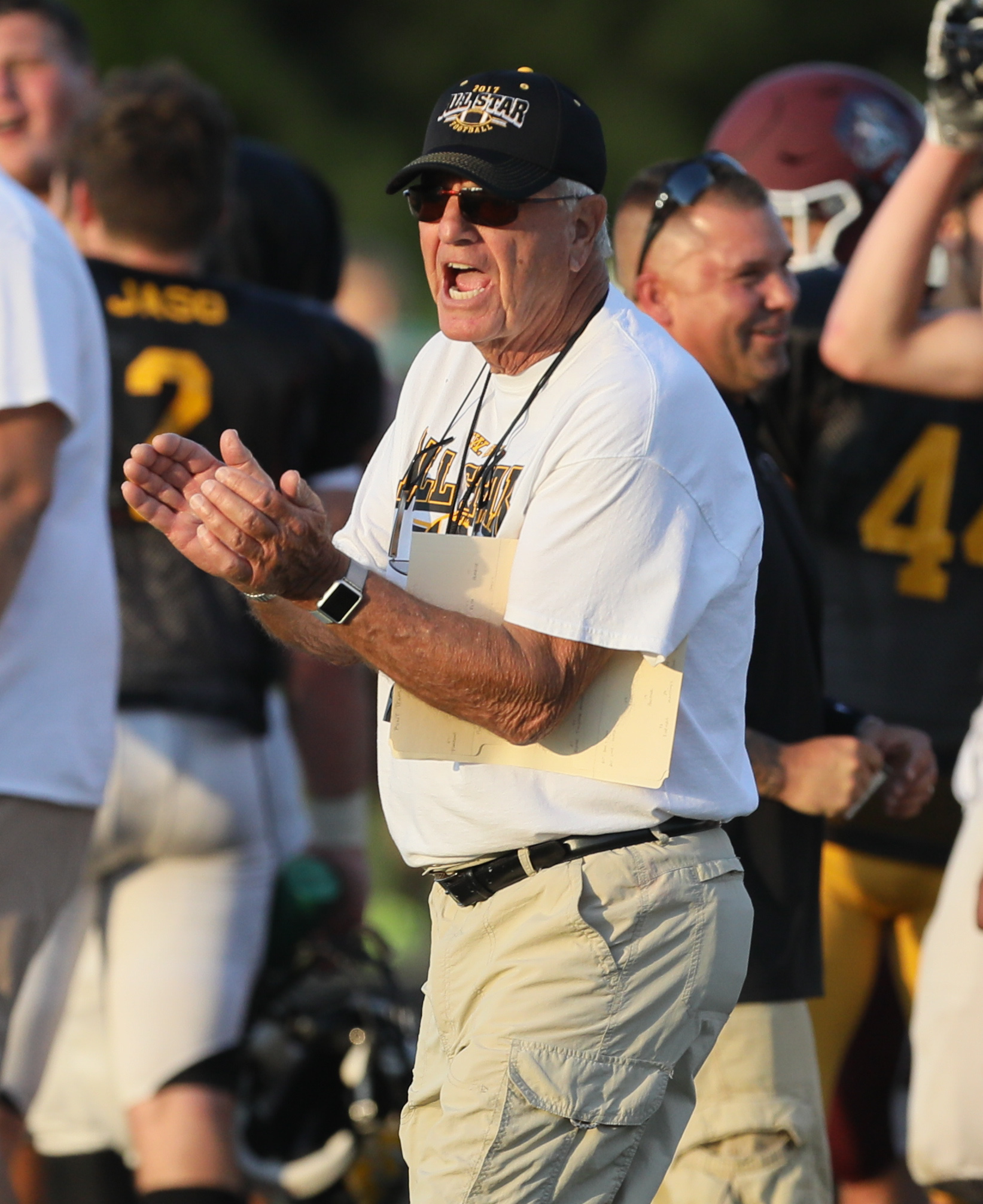
Ferguson is a longtime member and past president of the National Football Foundation. He also has served as a voluntary coach at the annual Regional All-Star Football Game.
In 1996, he was selected for the Findlay College Hall of Fame, and in 2003 the Rossford Football Hall of Fame.
In 2010, Ferguson earned the National Football Foundation Chapter Leadership Award.
The Blade: What makes Rossford schools and the community there such a special place?
Ferguson: “Living in the Rossford community has been my life. I moved to Rossford from East Toledo when I was in the sixth grade and immediately loved it. The small-town atmosphere was awesome. Everyone knew who you were and looked out for you. Everyone was proud to be a Bulldog! I got involved in sports in the seventh grade and just loved all the sporting activities. As a small town, everyone attended the sporting events, and it gave me the desire to compete and be the best. was so lucky and happy my parents chose Rossford as home.”
The Blade: What does it mean to you to have the football stadium in Rossford named after you?
Ferguson: “Having the stadium named Jackson-Ferguson Stadium was a total shock to me. Things like that usually happen when you go to the great big beyond. It was truly an unexpected honor, and it was a few weeks later that my father passed. He was extremely proud. Let’s face it, every player and coach owns a part of that field and the award. It’s their sweat and hard work that put my name up there, I just enjoyed the ride.”
The Blade: Who are some of your favorite athletes and coaches that you have worked with?
Ferguson: “I have had the opportunity to work with so many great players. If I mentioned one, I would have to do it for all and that would take me forever. Those players know who they are. I do have a list of several Rossford football players in the Hall of Fame contributing to our success: John Miller, Albert Sallee, Ron Recknagel, Clyde Alexander, Mike Kornasiewicz, Mike Romp, John Murphy, Rob Hill, Tom Jackson, Toney Lengel, Jason Durden, Manny Durden. I’m sure more will be added to this list.”
The Blade: Your teams produced six NLL titles. How much work went into achieving those championships and what do they mean to you?
Ferguson: “I believe when you’re losing you do your best work trying to get into the win column. You exhaust every effort to try and turn things around. Granted, sometimes you just don’t have the players you need to compete. We played as the smallest school in a very tough league, the NLL. Every game was a huge challenge for us but that never deterred our effort to play to win.”
The Blade: What are some of the performances that stick out to you?
Ferguson: “I know this is going to sound strange but the performances that stick out to me are the games that we lost. It goes back to “What If” or “Why didn’t we.” These were character-builder games and learning that life has to go on. You take something positive from it. It becomes a lesson on life in never giving up. What a great game!”
The Blade: How much and in what ways has high school football changed since your last days as a coach?
Ferguson: “I have been retired from teaching and coaching for 21 years and still miss it. The game has changed during this time. For instance, the weight programs, specialty programs, etc. have all improved. The various offensive and defensive schemes have become more complicated. The coaches who win year in and year out are something special. Football has become a year-round job putting more stress on players, coaches, and coaches’ families.”
The Blade: What do you think of the changes in the conferences over the years, particularly the creation of the Northern Buckeye Conference and the recent realignment of the Northern Lakes League?
Ferguson: “The conference changes with the NLL and NBC is the best thing to happen. It has brought parity. Even though we loved the NLL, it was time for this to emerge. Change is always a possibility. Get used to it.”
The Blade: What makes Jackson-Ferguson Stadium such a special venue?
Ferguson: “Just about every football official or visiting coach has remarked about how neat the stadium is with the bowl effect. I am so jealous we did not have the new stadium available to us. It is one of the premier stadiums in the state [along with] the new indoor complex called the ‘R.’”
The Blade: How much did you enjoy coaching in the Northwest Ohio Regional All-Star Football Game?
Ferguson: “It was an ending for a lot of the high school football players and the beginning for several players moving on to college football. These players were excited to participate in this game. A lot of new friendships were developed during this week. Winning was basically determined by the schools and athletes assigned to your team.”
The Blade: Tell me about your involvement with the National Football Foundation and the work that organization does.
Ferguson: “I am extremely proud that when I retired from football I was asked by Bob Eberly if I would like to be a member. I always looked up to this organization for what they have given in recognition of their outstanding contribution to scholastics and participation in football. I am also proud to have served as president for three years. Our 26 directors volunteer their time with many hours of hard work putting our annual banquet together. The banquet this year will be on March 12 at the Glass City Center. Our speaker will be Marcus Freeman, head football coach at Notre Dame.”
The Blade: Who were your inspirations?
Ferguson: “Some of the people who have had a major influence on my life: Jim Owen, Bud Gladieux, Stan Weber, Don Jackson, Jim Whittington, By Morgan, Jim Houdeshell, Fred Koester, Mark Hamen, Mike Hackworth, Bob Eberly, and my family. I’m sure there are others and I apologize for not mention you.”